Adjustments in Gaming Duties Transform Mobile Platform Offerings Across Britain
Dana Vogel · Sep 19, 2026
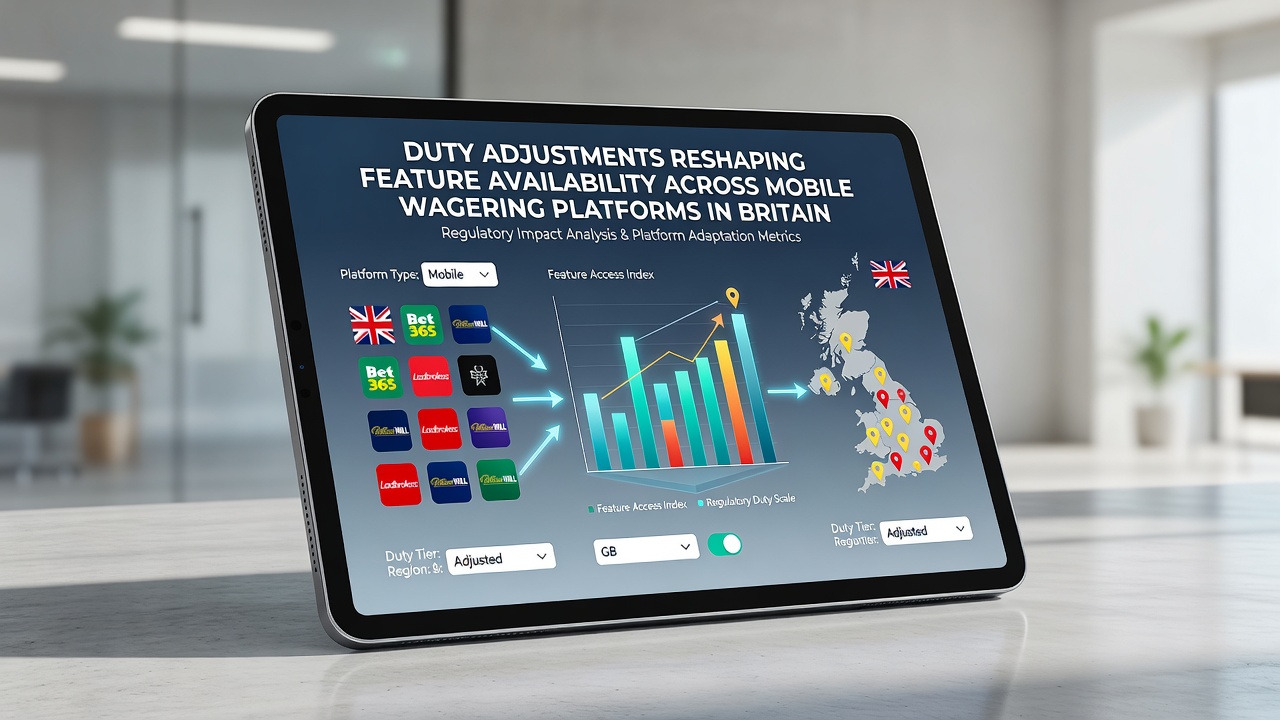
Adjustments in Gaming Duties Transform Mobile Platform Offerings Across Britain
Data from recent industry analyses shows that duty adjustments have prompted mobile wagering platforms in Britain to modify feature sets, with changes affecting everything from bonus structures to game selections and verification processes, while operators recalibrate to maintain compliance and user engagement levels.
Background on Duty Adjustments and Market Response
Operators across Britain have navigated revised duty frameworks that took effect in prior periods, leading to shifts in how mobile platforms present promotions, odds, and interactive elements, according to figures compiled by trade associations monitoring the sector. These modifications arise because platforms must balance increased fiscal obligations with the need to sustain competitive mobile experiences, resulting in streamlined offerings that prioritize core wagering functions over expansive bonus libraries in some cases. Observers note that many providers have consolidated their mobile app interfaces to highlight essential betting markets while scaling back ancillary features such as certain live-stream integrations or tiered loyalty rewards that previously required higher operational margins.
Feature Availability Changes in Detail
Mobile users have encountered reduced availability of specific promotional tools on several platforms, including instant deposit bonuses and cross-sport accumulator enhancers, because duty recalibrations have narrowed profit margins and forced selective feature retention. Research indicates that slot game libraries on mobile have seen selective curation, with operators favoring titles that carry lower associated costs and removing others that demand intensive server resources or complex bonus mechanics. Those who track these trends report that live racing markets maintain robust mobile support, yet equine odds bonuses appear less frequently, as platforms redirect resources toward regulatory adherence and core market stability.
What's interesting here is how verification processes have evolved alongside these adjustments, with some apps introducing streamlined identity checks that tie directly into feature unlocks, allowing quicker access to adjusted wagering options without expanding the full suite of legacy promotions. Data shows sustained user migration toward platforms that offer transparent feature lists updated in real time, reflecting the new duty environment.
Impacts Observed Through September 2026
Projections for September 2026 highlight further refinements, as updated duty reporting requirements are expected to encourage additional feature prioritization on mobile interfaces, particularly in team sports markets where dynamic odds updates remain prominent. Platforms have already begun testing configurations that limit certain high-variance slot mechanics during peak hours to align with cost structures, while preserving seamless navigation for traditional sports betting. Studies from academic sources reveal that user retention rates hold steady when platforms emphasize reliability in core functions rather than breadth in promotional layers, prompting many operators to adopt this approach ahead of the September 2026 benchmarks.

Take one case where experts examined a major operator's app rollout, finding that equine-focused bonuses contracted by measurable percentages while football accumulator tools expanded slightly to capture consistent engagement. This pattern aligns with broader data indicating that mobile wagering in Britain continues to grow overall, even as feature menus become more targeted.
Comparative Insights from Other Regions
Analysts often reference practices in other jurisdictions to contextualize Britain's adjustments, noting that similar duty pressures in Canada have led gaming associations to advocate for balanced feature retention strategies that support both mobile accessibility and fiscal responsibility. A report from the Canadian Gaming Association outlines how operators there adapted slot availability and bonus caps without disrupting core user flows, providing a parallel that British platforms appear to follow in selective ways. Meanwhile, research from the University of Sydney's gambling studies unit demonstrates that Australian markets experienced comparable shifts in mobile feature sets following tax revisions, with emphasis placed on verification enhancements that indirectly support sustained wagering activity.
These examples illustrate how duty adjustments reshape availability across platforms without halting innovation entirely, as providers experiment with hybrid models that blend restricted promotions with enhanced real-time data feeds. Observers continue to monitor September 2026 developments for signs of further convergence between British practices and those documented elsewhere.
Conclusion
Overall patterns confirm that duty adjustments continue to drive targeted modifications in mobile wagering features throughout Britain, with platforms responding through selective curation of bonuses, games, and tools while preserving essential market access. Evidence from multiple sources underscores the ongoing adaptation process, setting the stage for additional refinements around the September 2026 period as operators align with evolving requirements.